
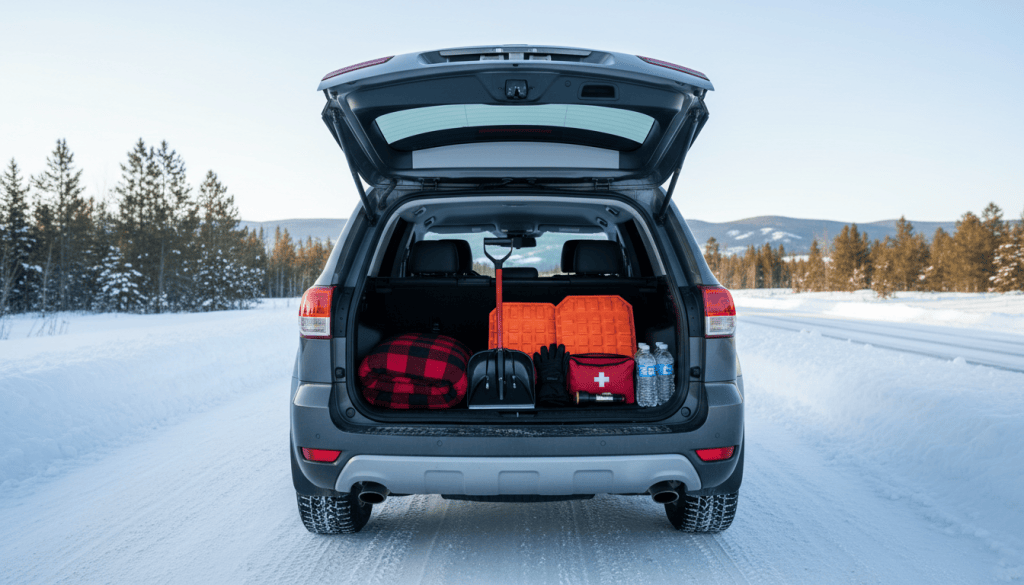
A winter car emergency kit should help you stay warm, visible and able to call for help if snow, ice or a breakdown delays your trip. You do not need an expensive premade bundle. Start with a few dependable essentials and check them before every long winter drive.
This checklist is based on guidance from Canada’s emergency preparedness program and Transport Canada. It applies particularly well to Canadian winters and cold-weather travel in the northern United States.
The winter car emergency kit checklist
Warmth and personal safety
- Warm blanket or compact insulated sleeping bag; spare gloves, socks, hat and boots.
- Water in freeze-resistant containers and shelf-stable snacks; inspect and replace supplies regularly.
- First-aid kit, necessary personal medications, and an emergency seatbelt cutter/window escape tool stored within reach.
- Flashlight or headlamp with spare batteries, reflective vest and warning triangles.
- Phone charging cable and a charged power bank; cold temperatures can reduce battery performance.
Vehicle recovery and visibility
- Snow brush, ice scraper and compact shovel.
- Traction mats or sand/non-clumping cat litter to help with a slippery surface.
- Booster cables or a compatible jump starter, plus appropriate windshield washer fluid.
- Roadside assistance details, paper map, whistle and emergency contacts.
Do not assume a jump starter or recovery gear works without checking the instructions and your vehicle’s requirements. Heavy towing or recovery is best left to trained professionals.
Where to store everything
Put a compact grab-and-go pouch with a flashlight, warm clothing, phone charger and emergency contact card inside the cabin. Keep bulky items in a secured trunk organizer so they cannot become projectiles during sudden braking. Avoid placing sharp or heavy tools loose on a passenger seat.
What to check before a winter road trip
- Review the weather forecast and road advisories for the full route, not just the destination.
- Tell someone your route and estimated arrival time when driving in remote areas.
- Check tire condition and the manufacturer’s recommended cold tire pressure. See our winter tire pressure guide.
- Inspect wipers, washer fluid, lights and fuel or charge level.
- Check the kit for expired supplies, depleted batteries and clothing that no longer fits.
If your car becomes stuck in severe weather
Call emergency services when anyone is in immediate danger. If the vehicle is in a reasonably safe location, staying with it may offer better shelter and visibility than walking into a storm. Assess traffic and carbon-monoxide hazards. Never run the engine with a snow-blocked exhaust pipe. Follow local emergency advice and Transport Canada’s stranded-driver guidance.
FAQ
Is a premade winter emergency kit enough?
It can be a useful starting point, but compare its contents against your climate, passengers and travel distance. Many kits lack sufficient warm clothing, water or vehicle-specific equipment.
Do I need different supplies for an EV?
The same personal safety essentials apply. Keep the battery sufficiently charged, understand your vehicle’s cold-weather range and charging options, and carry the correct charging accessories for your route.
Last reviewed: November 10, 2026. This is a general preparedness checklist, not a substitute for emergency instructions or your vehicle manual.

