
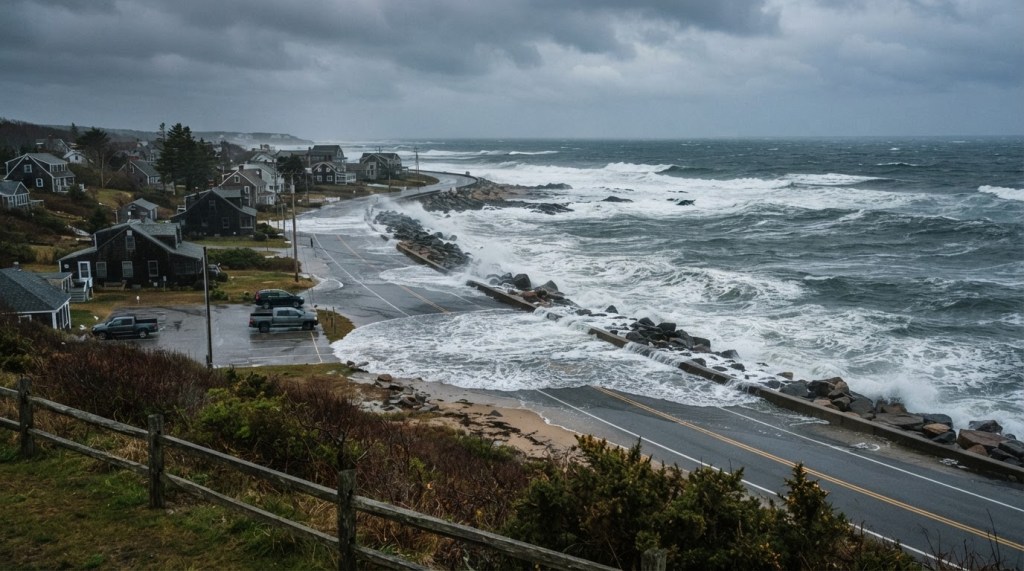
A coastal flood watch means that conditions could produce significant flooding near the shore. A warning signals a more immediate or serious threat. In Canada, coastal flooding statements and colour-coded alerts communicate risk differently, so do not assume a Canadian statement has the same meaning as a US watch. Check the full alert for your location and follow local emergency instructions.
On November 24, 2026, Google Trends listed coastal flood watch in the United States and coastal flooding statement in Canada among rising searches. These are search signals, not evidence that every coastal community faces flooding today.
Why coastal flooding is different from ordinary rain
Water can reach normally dry streets from the ocean or a large lake when winds, waves, storm surge or tides raise water levels. A dry-looking forecast for your own neighbourhood does not guarantee that a low-lying waterfront road is safe. The risk may also be concentrated around a particular tide cycle or shoreline.
US coastal flood alerts: what each means
A watch gives you time to prepare for potentially significant coastal flooding. A warning means that moderate or major flooding is happening or expected imminently. An advisory generally describes less severe flooding, but flooded roads and access routes can still be hazardous. Local National Weather Service offices set thresholds for their own coastlines; there is no single nationwide water-depth threshold.
Read the NWS alert definitions and then open your actual local alert at weather.gov. Pay attention to its affected areas, validity period and expected impacts.
Canada: statements, warnings and alert colours
Environment and Climate Change Canada uses yellow, orange and red to indicate increasing potential severity. The colour, alert type and hazard together provide context. An alert is not a prediction that every property in the affected region will flood. Ontario residents continue to receive coastal flooding alerts from provincial authorities, according to ECCC’s coastal flooding program.
Check Weather Information for your region and read the Canadian weather alert guide. If you live near the Great Lakes or St. Lawrence, also follow local conservation authority or provincial messages where applicable.
A practical checklist before the water rises
First, identify whether your home, hotel, parking spot or planned route is within the affected area. Check municipal road closures rather than relying on your usual navigation route. Charge your phone, prepare essentials and arrange a safe destination away from the shoreline if local authorities advise leaving. Move belongings or a vehicle only when it is safe to do so.
During an alert, avoid waterfront walks, seawalls and flooded roads. Never try to determine whether a flooded road is safe by driving into it. Follow evacuation orders promptly. If immediate danger develops, contact emergency services. See Canada’s storm surge preparedness guidance for additional precautions.
FAQ: Does a watch mean I must evacuate?
Not automatically. A watch is a preparation signal, while evacuation decisions depend on local instructions and your exposure. Do not wait for a warning if emergency authorities already instruct you to leave.
FAQ: Can flooding happen without a storm overhead?
Yes. Water levels, waves and tides can create coastal flooding even when rain is not falling at your exact location. Check the specific coastal forecast and local closures.
Related: Winter storm watch vs warning. This guide explains alert terminology, not a live forecast. Sources checked November 24, 2026.

