
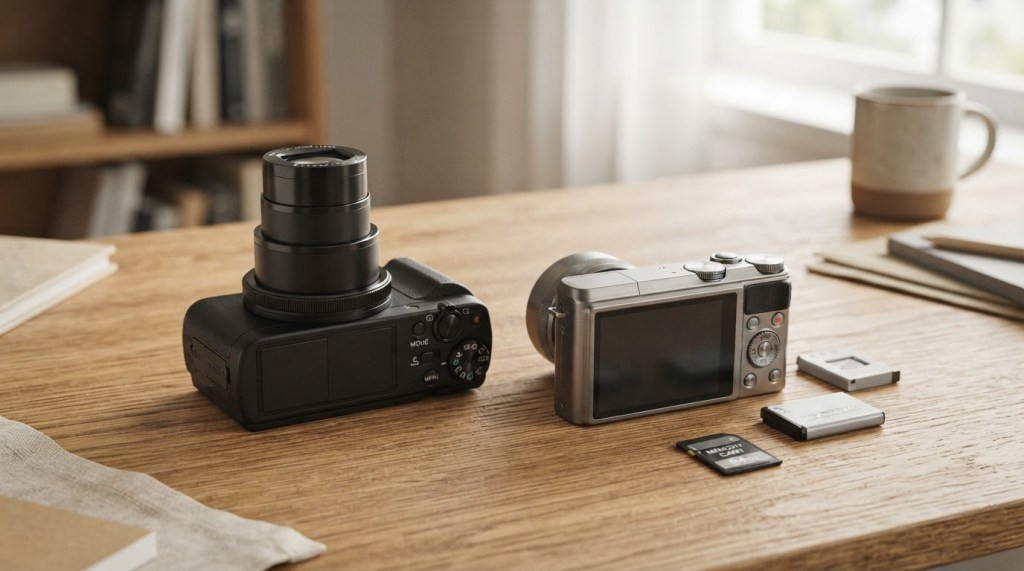
The best compact digital camera is the one that suits the photos you actually take. For casual retro snapshots, an older working point-and-shoot may be enough. For travel, prioritize usable optical zoom, a reliable battery and easy file transfers. For indoor photos, consider lens brightness, sensor size and stabilization instead of simply choosing the highest megapixel number.
Google Canada’s November 16, 2026 holiday search report reported a 50% year-over-year increase in Canadian searches for digicams. That is search interest, not proof that a particular camera is a good deal or that sales increased by the same amount.
Choose the camera type for your use
For a nostalgic look, look at sample images from the exact model, including flash portraits and daylight shots. For a pocket travel camera, consider how much zoom you need and whether it fits comfortably in a jacket. If you want better indoor results or more editing flexibility, investigate premium compacts with brighter lenses and larger sensors. A modern phone may remain the simplest choice for quick sharing.
Optical zoom, digital zoom and megapixels
Optical zoom changes the image through the lens. Digital zoom typically crops or enlarges the captured image, which can sacrifice detail. Compare the equivalent focal length range, not just the zoom multiplier: two cameras with the same multiplier can start at different wide-angle settings. More megapixels can help with cropping, but lens quality, noise and lighting also matter.
Manufacturer specifications are useful here. For example, Canon Canada’s compact-camera listings describe optical zoom, aperture and stabilization. Use the official product page for your chosen model rather than assuming every compact has the same features.
Battery and charging: the hidden cost
Check whether the model needs a proprietary rechargeable battery, external charger or common replaceable batteries. A cheap used camera is less attractive if replacement batteries are scarce. Confirm the charger is included and whether charging over USB is actually supported. The shape of the port alone does not establish that the camera charges through it.
Memory cards: confirm compatibility before buying
Older cameras may accept only certain card standards or capacities. SDHC and SDXC are distinct standards, not merely different labels on interchangeable storage. Check the manual for supported card type, maximum capacity and recording speed. The SD Association’s compatibility FAQ explains why a newer SDXC card may not work in an older SD or SDHC device. Its video speed guide helps interpret speed ratings if you intend to record video.
Used-camera inspection checklist
Ask for an original sample photo, a video of the camera turning on and a description of included accessories. In person, inspect the lens for damage or haze, check that it extends and retracts smoothly, try the zoom and flash, review a photo on the screen and confirm the camera saves and reads a file. Inspect battery contacts and the card door. Do not force a stuck lens. Where possible, choose a seller with a clear return policy.
Compare the total price, not just the listing
Add the price of a compatible battery, charger, memory card, card reader, case and shipping. Compare that total with a new or refurbished alternative that includes a warranty. A fashionable older model can cost more than a less famous camera with similar capabilities. Avoid paying extra merely because a listing calls it viral or rare.
FAQ: Do I need a CCD sensor for a vintage look?
No. A camera’s processing, flash, lens, exposure and lighting all influence the result. Compare unedited sample photos rather than treating one sensor technology as a guarantee of a particular look.
FAQ: How do I transfer pictures to my phone?
Check whether the camera supports wireless transfer, a USB connection or removable storage. A compatible card reader may be simpler for older models. Confirm your phone’s connector and supported card format before purchasing an adapter.
Related: MP3 player buying guide. Sources checked November 24, 2026. No live price or stock claims are made.

