
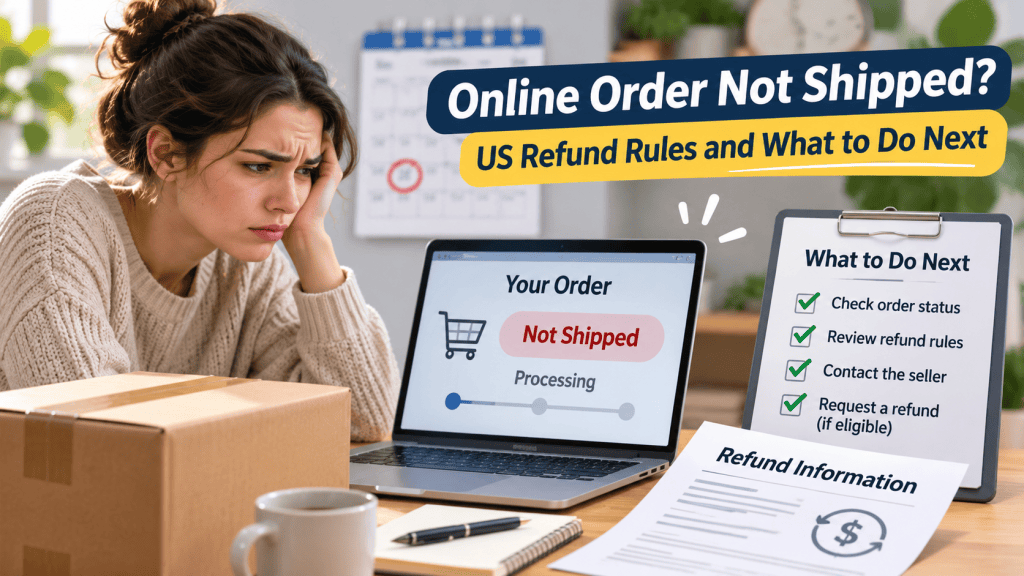
If a U.S. online retailer does not ship your order on time, you may be entitled to a refund rather than an indefinite wait. The Federal Trade Commission explains that sellers must ship within the time they advertise, or within 30 days when no shipping time is stated, subject to the applicable rules. If a seller cannot ship on time, it generally must offer you the choice to accept a delay or cancel for a prompt refund.
This guide summarizes general U.S. consumer guidance, not individualized legal advice. Rules and remedies may differ for certain transactions and for shoppers outside the United States.
What does the FTC say about shipping deadlines?
According to the FTC’s online shopping guidance, an online seller that promises a shipping time should have a reasonable basis for it and follow that promise. If it does not state a time, the FTC’s general rule uses 30 days after receiving the completed order. Shipping is not the same as delivery: the rule focuses on when the seller hands the item over for shipment, not a guaranteed arrival date.
What to do when your order is delayed
- Check the original confirmation. Save the advertised shipping window, receipt, item description and order number.
- Check the seller’s order status. A label-created notice is not always proof that the carrier has received the parcel.
- Contact the seller in writing. Ask whether the item has shipped, for a verifiable tracking number, and for the revised shipping date.
- Decide whether to accept the delay. If the merchant cannot meet the applicable shipping time, review its delay notice and refund option.
- Request cancellation and a refund when appropriate. Keep a copy of the request and the merchant’s response.
- Consider a payment dispute. If you paid by credit card and the seller does not resolve a non-delivery problem, contact your card issuer promptly about its dispute process and deadlines.
What if the package says delivered but you cannot find it?
First check the carrier’s delivery details, building mailroom and household members. Contact the seller and carrier with the tracking number. A delivery scan can be useful evidence, but its meaning depends on the circumstances; do not assume it settles every dispute.
What if the store offers only store credit?
Do not assume store credit is the only available remedy. Review the reason for cancellation, the merchant’s stated terms and the FTC guidance. A refund for a seller’s failure to ship can be different from a voluntary return of merchandise that arrived as ordered.
How to reduce the risk before ordering
Before paying, capture the checkout page showing shipping promises and total price. Check independent seller reviews, verify the website address, and read return terms. The FTC recommends paying by credit card when possible because it offers important protections when a purchase goes wrong. Avoid paying unfamiliar sellers through irreversible methods simply to obtain a discount.
Frequently asked questions
Does the 30-day rule guarantee delivery within 30 days?
No. It generally addresses the seller’s shipment timing when no shipping date is promised; delivery can occur later.
Can a merchant keep moving my ship date?
The FTC describes requirements for seeking a buyer’s consent to delays and offering cancellation/refunds. Review the FTC guidance rather than relying solely on the seller’s customer-service script.
Does this apply to Canadian orders?
Not automatically. Canadian consumer-protection rules depend on the jurisdiction and transaction. This article is about the U.S. framework.
Bottom line
Document the promised shipping time, contact the seller, and request a refund when appropriate. If a merchant will not resolve a valid non-shipment complaint, ask your card issuer about dispute options promptly. Start with the FTC’s official online shopping resource.

