
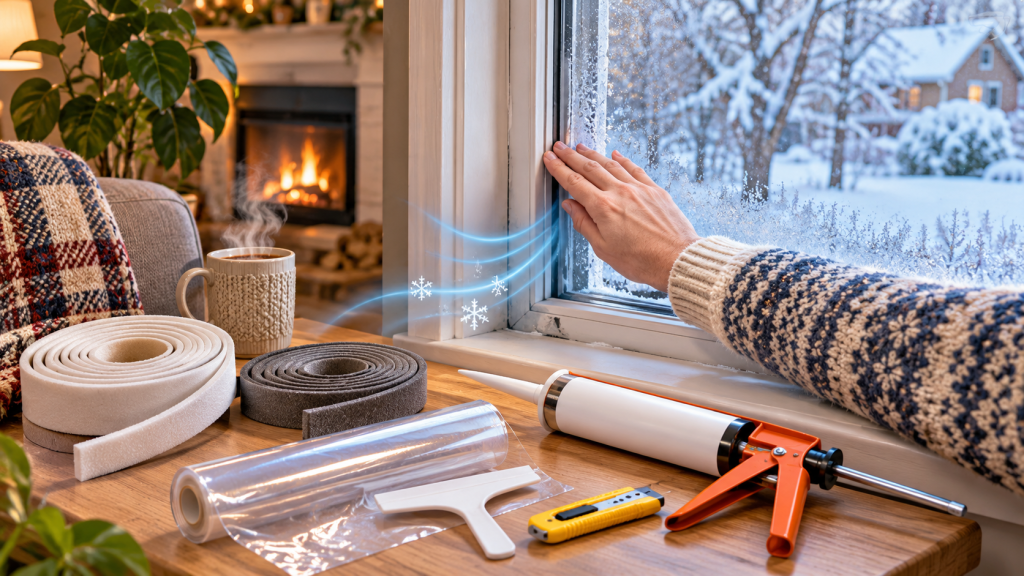
A cold draft does not automatically mean you need new windows. Many uncomfortable rooms have air leaks around the frame, sash or trim that can be addressed with weatherstripping, caulk or removable seasonal sealing. Start by identifying where air is entering before paying for replacement windows.
First: identify the source of the draft
On a windy day, carefully feel for air movement around the sash, trim and nearby outlets. Check whether the window latches fully and whether existing weatherstripping is compressed, missing or torn. A cold glass surface can also create a sensation of falling cool air even without a substantial exterior leak. Condensation between sealed glass panes is a different issue from surface condensation and can indicate failed glazing seals.
Seven practical fixes to consider
1. Adjust or repair window latches
A sash that does not close squarely can leave a gap. Clean the tracks and confirm the lock pulls the sash snugly into position. Do not force damaged hardware.
2. Replace worn weatherstripping
Weatherstripping is designed for moving joints, such as where a sash closes against its frame. Match the replacement profile to the window and test that it still opens, closes and locks properly.
3. Caulk stationary gaps
Use an appropriate sealant for fixed gaps at trim or joints that do not need to move. Follow product temperature and surface-preparation instructions. Avoid sealing drainage paths or weep holes.
4. Try a removable interior window film
Seasonal film kits can create an additional still-air layer. Follow the manufacturer’s installation directions and avoid blocking emergency egress or damaging painted finishes.
5. Use insulating curtains strategically
Close curtains at night for comfort, then open them during sunny winter periods when beneficial. Keep fabric clear of heaters and vents.
6. Check the surrounding wall and trim
Air may be entering through gaps in the surrounding assembly rather than the glass itself. Large or recurring gaps, water staining or soft wood warrant professional assessment.
7. Consider storm windows or replacement only when justified
If frames are deteriorated, glazing seals have failed or comfort problems persist despite appropriate sealing, compare repair, storm-window and full-replacement quotes. Ask for installation details, warranty terms and performance ratings rather than relying on a generic percentage-savings claim.
How to compare new windows if you do need them
Compare U-factor (heat transfer), solar heat gain coefficient (SHGC), air-leakage performance, frame condition and suitability for your climate. A lower U-factor generally means less heat transfer, but the right SHGC depends on orientation and local heating/cooling needs. See the U.S. Department of Energy’s ENERGY STAR window explanation and DOE’s window selection guidance.
When to call a professional
Seek help if you see recurring water intrusion, mold, rotten frames, broken glazing, unsafe access or drafts that remain severe after simple fixes. Renters should ask their landlord before modifying building components.
Bottom line
Start with low-cost inspection and reversible fixes. Replace a window when its condition or performance justifies it—not simply because the glass feels cold on a winter morning. The Department of Energy identifies air sealing and insulation as important ways to reduce household energy waste.

