
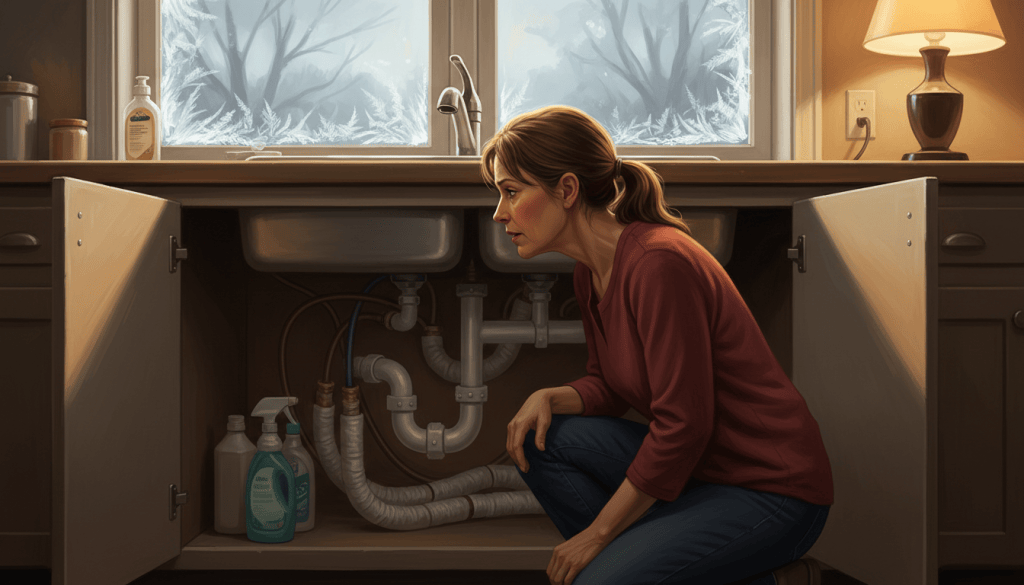
Frozen pipes can interrupt water service and, if a pipe splits, cause expensive water damage. The best prevention is to identify plumbing exposed to freezing air, reduce drafts, maintain adequate indoor heat and know how to shut off the water before an emergency.
Where pipes are most vulnerable
Start with unheated basements, crawlspaces, garages, exterior-wall cabinets and plumbing near gaps where outside air enters. Pipes behind a sink cabinet on an exterior wall may be at risk even when the room itself feels warm. Outdoor hose connections and seasonal plumbing also need attention according to the home’s design and local climate.
Seven steps to prepare your plumbing
1. Find your main water shutoff
Locate and label the valve, and make sure responsible household members know where it is. If it is stuck, ask a plumber to service it rather than forcing it.
2. Insulate accessible vulnerable pipes
Use pipe insulation suited to the pipe diameter and location, installed according to its product instructions. Insulation slows heat loss but does not create heat, so it cannot guarantee protection in prolonged freezing conditions.
3. Seal cold-air pathways
Inspect gaps around pipe penetrations and where exterior air reaches plumbing cavities. Use suitable air-sealing materials and respect fire-rated assemblies and ventilation requirements. The U.S. Department of Energy recommends careful air sealing around plumbing penetrations.
4. Maintain safe indoor heating
Keep the home heated during cold spells, including when traveling. An unheated room with water lines may need professional attention. Do not use outdoor grills, camping stoves or unvented combustion heaters indoors.
5. Open sink cabinets when appropriate
For vulnerable pipes along exterior walls, opening cabinet doors may allow warmer room air to circulate. Keep household chemicals out of reach of children and pets.
6. Prepare outdoor plumbing
Disconnect garden hoses and follow the manufacturer’s instructions for frost-proof faucets, irrigation systems and seasonal shutoffs. Requirements vary by installation.
7. Have a cold-snap plan
Monitor forecasts and know whom to call if water stops flowing. Some local utilities recommend letting a small amount of water run during extreme cold, but this depends on local guidance, plumbing and water-conservation restrictions; do not assume it is always necessary.
What to do if a faucet stops running
Check whether neighbors also lost water service, and contact your utility if an outage is possible. If you suspect a frozen pipe, shut off the main valve if there is leakage or a burst. Do not use an open flame, blowtorch or high-heat device to thaw pipes. If a pipe is inaccessible, damaged or near electrical hazards, call a licensed plumber. If water is leaking near electrical equipment, stay clear and seek professional help.
What about pipe insulation versus heat tape?
Foam sleeves are passive insulation. Electrical heat-tracing products add heat but require correct product selection, installation and electrical safety measures; consult a professional for concealed or complex locations. Neither option replaces proper building insulation and air sealing.
Frequently asked questions
Can pipes freeze above 32°F indoors?
Yes, if a localized pipe cavity is much colder than the room thermometer suggests. Inspect actual pipe locations and drafts.
Does dripping a faucet guarantee protection?
No. It may be one measure recommended in some situations, but it does not prevent every freeze or burst and should not replace insulation and heating.
Official sources
U.S. Department of Energy, Pipes in Exterior Walls and Air Sealing Around Piping; Government of Canada, Winter storms: How to prepare.
Updated November 12, 2026. Local plumbing codes and utility guidance take precedence.

