
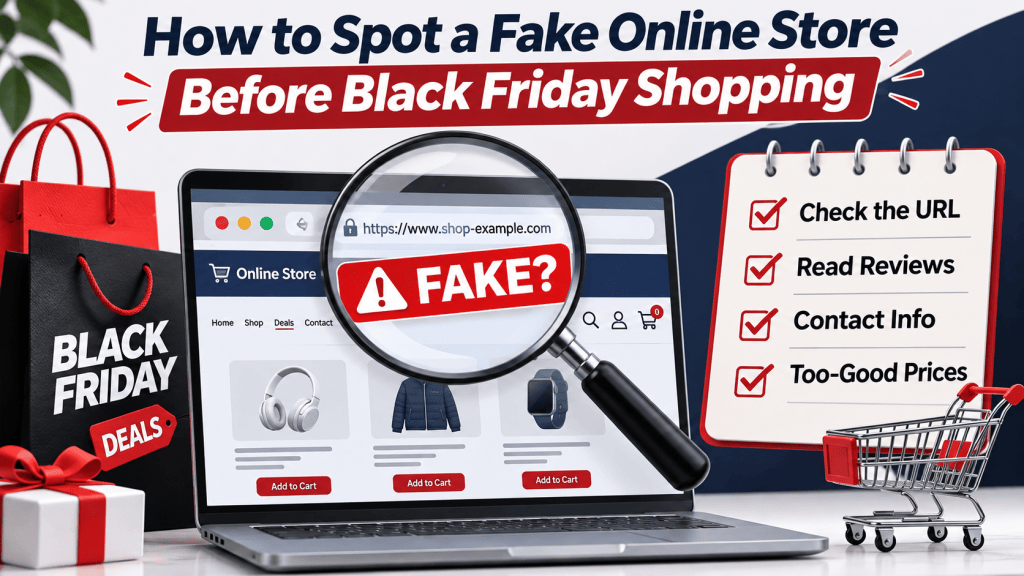
A convincing storefront, polished product photos and a dramatic discount do not prove that an online seller is legitimate. Before buying from an unfamiliar store, check the retailer independently, compare the price, read delivery and return terms, and choose a payment method that provides a practical dispute route.
Seven checks before entering payment details
1. Find the store independently
Rather than following a social media advertisement, search for the merchant separately. A fake advertisement may use a real company’s logo while sending you to a different domain.
2. Examine the exact web address
Look for misspellings, added words or an unrelated domain. A padlock or HTTPS connection encrypts traffic but does not prove the seller is honest.
3. Search for complaints beyond the seller’s website
Search the business name alongside “review,” “complaint” and “scam.” Check more than one independent source. A brand-new business may have little history, which calls for caution rather than an automatic verdict.
4. Compare the total price
Compare the same product and model across reputable sellers. An unusually low price, especially in a social advertisement for an expensive item, is a warning sign. Factor in shipping, taxes and currency conversion.
5. Read return and shipping conditions
Find the return window, who pays return shipping, possible restocking charges, promised shipping time and customer service contact details. Screenshot the product description and policies before ordering.
6. Check the payment request
The U.S. FTC recommends credit cards for their dispute protections. Be especially wary of a seller insisting on gift cards, wire transfers or cryptocurrency. Consumer rights vary by country, issuer and transaction; a card does not guarantee a refund.
7. Keep records
Save the order confirmation, payment receipt, item description and any messages. They are useful if the product never arrives or differs substantially from the listing.
What to do if you already ordered from a suspicious site
- Contact the merchant through a verified channel and document the response.
- If the order fails or the charge is unauthorized, contact your card issuer or payment provider promptly and ask about dispute options.
- If you entered a password reused elsewhere, change it and enable multifactor authentication.
- Report suspected fraud to the appropriate authority; avoid anyone demanding an upfront fee to recover your money.
Frequently asked questions
Does a store with HTTPS mean it is safe?
No. HTTPS protects the connection, not the trustworthiness of the merchant.
Are all unusually cheap deals scams?
No. Treat them as a reason to verify the seller, model and terms independently.
Is a sponsored search result verified?
No. Advertising placement is not a substitute for researching the merchant.
Official consumer resources
U.S. FTC: Holiday shopping scams · Competition Bureau Canada: Purchase of merchandise scams · FTC: When online shopping goes wrong.
Checked November 8, 2026. This is general consumer education, not individualized legal or financial advice.

