
To prevent ice dams, keep warm indoor air from leaking into the attic, maintain appropriate insulation and ventilation, and address roof-edge snow safely. Ice dams can send melting snow beneath shingles and into ceilings or walls. Clearing ice alone may relieve a symptom without fixing the underlying heat loss.
This guide is for homeowners in snowy parts of the United States and Canada. It explains what to inspect, which tools may help, when to hire a professional, and what popular fixes cannot accomplish. It is general maintenance information, not a substitute for a roof inspection.
What is an ice dam?
An ice dam is a ridge of ice near a roof’s lower edge. Snow melts on a relatively warm upper roof, water travels toward colder eaves, and refreezes. Additional meltwater can pool behind the ridge and find a path under roofing. The University of Minnesota Extension explains that uneven roof temperatures, snow and outdoor conditions combine to create this problem.
How to recognize a possible ice dam
- A substantial ridge of ice at the eaves or in a gutter, especially after freeze-thaw cycles.
- Repeated large icicles along one roof section. Icicles alone do not prove a leak, but warrant closer observation.
- Water stains, peeling paint or damp drywall near exterior ceilings and walls.
- Uneven snowmelt on the roof that suggests heat escaping into the attic.
Do not stand under heavy icicles or attempt to inspect a slippery roof yourself. If water is entering the home, move belongings away from the affected area, document the damage and contact a qualified roofing professional. Address active water intrusion promptly.
Seven steps to reduce ice-dam risk
1. Inspect gutters and downspouts before winter
Clear leaves and debris when it is safe to do so. Make sure downspouts direct water away from the foundation. A blocked gutter can make drainage worse, although a clean gutter alone cannot correct a warm-roof problem. See the Government of Canada gutter-maintenance guidance.
2. Look for attic air leaks
Warm indoor air can escape through gaps around an attic hatch, plumbing penetrations, wiring and recessed fixtures. Air sealing is often more important than simply adding insulation on top. Have an experienced contractor assess the attic if access is unsafe, wiring is exposed, or you suspect moisture damage.
3. Check insulation coverage
Thin or uneven attic insulation allows heat to reach the roof deck. The correct insulation level depends on climate, construction and local requirements. Do not cover electrical hazards or obstruct soffit vents. The US Department of Energy’s building-science guidance recommends air sealing before adding blown insulation to an existing vented attic.
4. Keep the designed ventilation path open
In a vented attic, soffit-to-roof ventilation helps maintain appropriate conditions. Insulation baffles can preserve the gap between insulation and roof sheathing. Roof assemblies differ: an unvented conditioned attic should not be modified as if it were a traditional vented attic. Consult a qualified building professional before changing vents.
5. Remove roof-edge snow only from a safe position
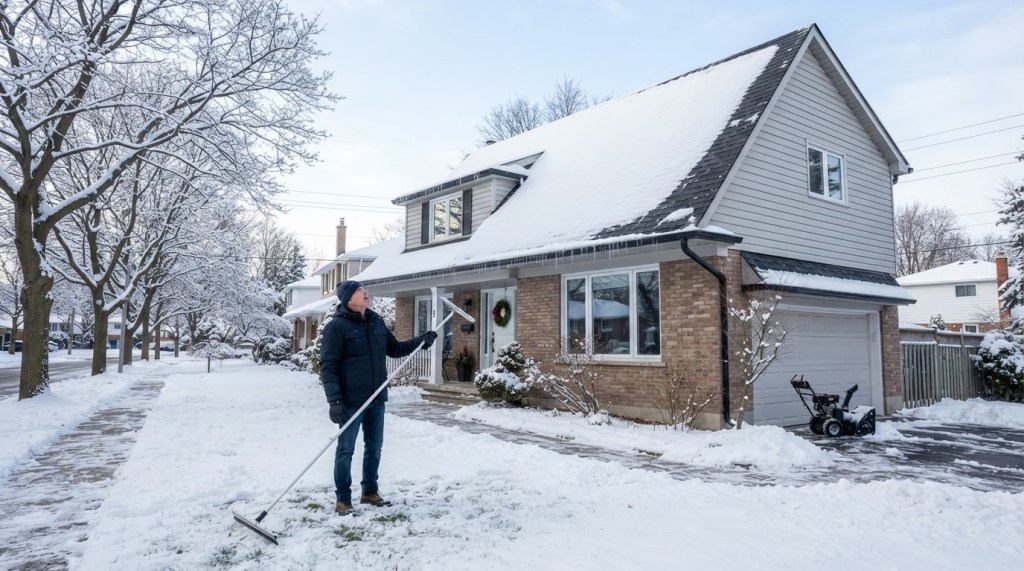
A purpose-built roof rake may help remove accessible snow from the edge while you remain safely on the ground. Follow its instructions, keep clear of falling snow and ice, and avoid power lines. Do not climb onto an icy roof or stand on a ladder to chip at ice. For steep, high or difficult roofs, hire an insured professional. Canadian federal guidance also emphasizes safe roof snow removal and professional help when needed.
6. Treat heat cables as a limited tool, not the first fix
Properly selected and professionally installed roof heat cables can sometimes create meltwater channels, but they consume electricity and do not repair attic heat loss. Avoid improvised electrical setups or extension-cord solutions exposed to snow and water. Check manufacturer instructions and local electrical requirements.
7. Plan roof-edge protection during reroofing
When replacing a roof, discuss an appropriate self-sealing ice-and-water membrane with the contractor. It can help resist water intrusion at vulnerable eaves but does not prevent the ice dam itself. Installation details depend on local building codes and roof design. See US DOE roof membrane guidance.
Roof rake vs heat cable vs attic improvements
| Option | Best use | Main limitation |
|---|---|---|
| Roof rake | Accessible snow removal from the ground | Temporary; can damage shingles if misused |
| Heat cable | Selected recurring problem areas after professional assessment | Uses electricity; does not fix heat loss |
| Air sealing and insulation | Long-term reduction of unwanted roof warming | May require professional diagnosis and attic work |
| Ice-and-water membrane | Water-intrusion protection during reroofing | Does not stop ice formation |
What not to do
- Do not attack roof ice with an axe, hammer or ice pick: damaged shingles and gutters can make leaks worse.
- Do not climb onto a snowy roof to clear it yourself.
- Do not assume all icicles mean the same underlying problem.
- Do not seal or block attic ventilation without understanding the roof assembly.
- Do not ignore interior water stains while waiting for warmer weather.
Frequently asked questions
Will cleaning gutters prevent ice dams?
It helps water drain but cannot eliminate ice dams caused by uneven roof temperatures. Check attic air leakage and insulation as well.
Do roof heat cables solve the problem permanently?
No. They may manage ice in limited locations but do not address the heat-transfer mechanism that commonly creates ice dams.
Should I remove all snow from my roof?
Not necessarily. The safest approach depends on roof design, snow load and local conditions. Avoid climbing; ask a professional if you suspect a structural load or leak hazard.
Can ice dams happen on a newer roof?
Yes. A newer roof can still develop ice dams if snow, roof temperatures and weather conditions allow them. Protective membranes may reduce leakage risk but do not eliminate the ice ridge.
Before the next snowfall: quick checklist
- Inspect gutters and downspout drainage from a safe location.
- Look for attic air leaks, uneven insulation and blocked vents.
- Keep a suitable roof rake available only if it can be used safely from the ground.
- Know whom to call for emergency roof leaks and snow removal.
- Check ceilings after major thaw-and-freeze periods.
Bottom line: Long-term prevention is mostly about controlling attic heat loss and protecting the roof assembly, not repeatedly breaking ice off the eaves.
Official and expert sources
- US National Weather Service: Preventing Roof Ice Dams
- Natural Resources Canada: Keeping the Heat In, section 5.5
- University of Minnesota Extension: Ice dams
- Government of Canada: Clear snow and ice
Editorial note: This article was reviewed against the linked sources on November 22, 2026. Featured image is an AI-generated concept illustration.

